Something has changed, and you haven’t caught up with it yet.
Maybe you planned it. You set out on the adventure, read all the books, told everyone how excited you were — and now it feels like you’re living on a boat, sailing stormy seas, constantly adjusting for a floor that won’t stay still.
Or maybe you planned none of it. The phone rang, the letter arrived, the scan was quiet, the job ended, the marriage ended — and the life you were standing in a fortnight ago simply isn’t there any more.
Either way, it’s okay to lose your footing for a while when you’re standing in unfamiliar waves.
Transitions come in all shapes
“Life transition” is a tidy phrase for some of the least tidy experiences a person can have. Here are some of the changes people bring here. You don’t have to be able to name yours to book a session.
A new baby
A baby changes everything, including you. There is the love, and there is also the exhaustion, the loss of the person you used to be, and the guilt for even thinking that. Both things are allowed to be true at once.
When a baby doesn’t come home
Miscarriage. Stillbirth. A termination you never wanted to have to consider. Years of trying, and treatment, and hoping. This is a loss the world often doesn’t know how to talk about, so it goes unwitnessed. Here it gets witnessed — however early it was, however long ago.
When the kids leave
You spent twenty years quietly making yourself unnecessary, and then it worked. The house is loud with quiet, the calendar has holes in it, and you’re not sure who you are when nobody needs you in that particular way. It’s grief, even though everyone keeps calling it a milestone.
Losing someone you love
Grief doesn’t move in tidy stages, and it doesn’t run to anyone else’s timetable — least of all the few weeks the world seems to allow. You don’t have to wait until it gets bad enough before you ask for help.
The end of a relationship
Separation, divorce, or the slow dissolving of something you thought was permanent. There’s the practical unravelling — the house, the money, who tells the kids — and underneath it, the loss of a future you had already imagined in detail.
When work ends or changes
Redundancy, restructuring, being let go, or walking away from something that was quietly making you ill. Work holds far more than income. It holds your routine, your standing, your sense of being useful, and most of the people you speak to in a day.
Retirement
Everyone tells you it’s the reward at the end. Nobody mentions the Tuesday morning three weeks in, when the diary is empty and you can’t quite identify that empty feeling. Stopping work is one of the biggest identity shifts there is.
Moving
A new suburb, a new city, a new country. Moving costs you your people, your shortcuts and your sense of being known. It can be lonely to admit that when you’re supposed to be having an adventure. If you arrived here from somewhere else, the immigration page goes further into it.
Health, diagnosis and a body that changed
An injury, chronic pain, a long illness, a diagnosis that reorganises your life. Everyone attends to the medical part. Far fewer people ask about the part where you quietly grieve who you were before the appointment.
Caring for the people who raised you
When roles shift within a family system, it can feel deeply uncomfortable. No one formally agreed to these changes or signed up for them. They simply evolve over time, often so gradually that you only notice once the weight of it lands.
Learning something new about yourself
A late ADHD or autism diagnosis. Coming out. Leaving a faith, or finding one. Realising that a way you’ve lived for years no longer fits. Understanding yourself better is good news that can still knock you sideways.
When the change is a good one
The promotion. The wedding. The house. The visa. The baby you longed for. Good change is still change, and it still asks you to become someone slightly different. Feeling wobbly during something you chose doesn’t make you ungrateful. It makes you human.
And then there are the ones that never make the list. Life after getting sober, or after stepping away from something that had a hold on you — that’s its own transition, and it’s rarely the one people prepare you for. Leaving a relationship that wasn’t safe. Coming out the other side of a court case, a rebuild, a long stretch of holding everything together for everybody. A change so particular to your life that it doesn’t have a name.
If yours isn’t on this page, it still counts. Bring it anyway.
Why change knocks us about
Here’s the part nobody warns you about: often it isn’t the event that undoes you, it’s the in-between. There’s the life you had, and there’s the life you’ll eventually have, and for a while you’re standing in the gap between the two with no map and no timeline.
Your brain runs on prediction. It likes knowing where you’ll be at three o’clock, who you’ll eat dinner with, and what you’re for. A transition wipes out a chunk of that, and your nervous system does exactly what it’s built to do — it goes to RED ALERT and stays there, scanning. That isn’t weakness, and it isn’t failing to cope. It’s an alarm system doing its job while it waits for the new pattern to arrive.
Counselling doesn’t hurry that along. It gives you somewhere to put it down, out loud, with someone who isn’t standing in the middle of it with you.
What it’s like to work with me
You don’t need to arrive with it organised. Most people turn up with a tangle and no clear idea where the beginning is, and that is a perfectly good place to start — untangling it is the work, not a prerequisite for it.
I won’t tell you what to do with your life. I work in a non-judgemental, kind, curious way that honours your own wisdom about your situation, because you’re the one who has to live in it afterwards. What I will do is listen properly, ask the questions the people around you can’t ask, and stay steady while you work out what this change actually means for you.
Feeling nervous about a first session is completely normal, and the occasional awkward moment is too — most people haven’t done this before. After that first hour you should leave feeling heard, understood and seen. That’s the part I care about most.
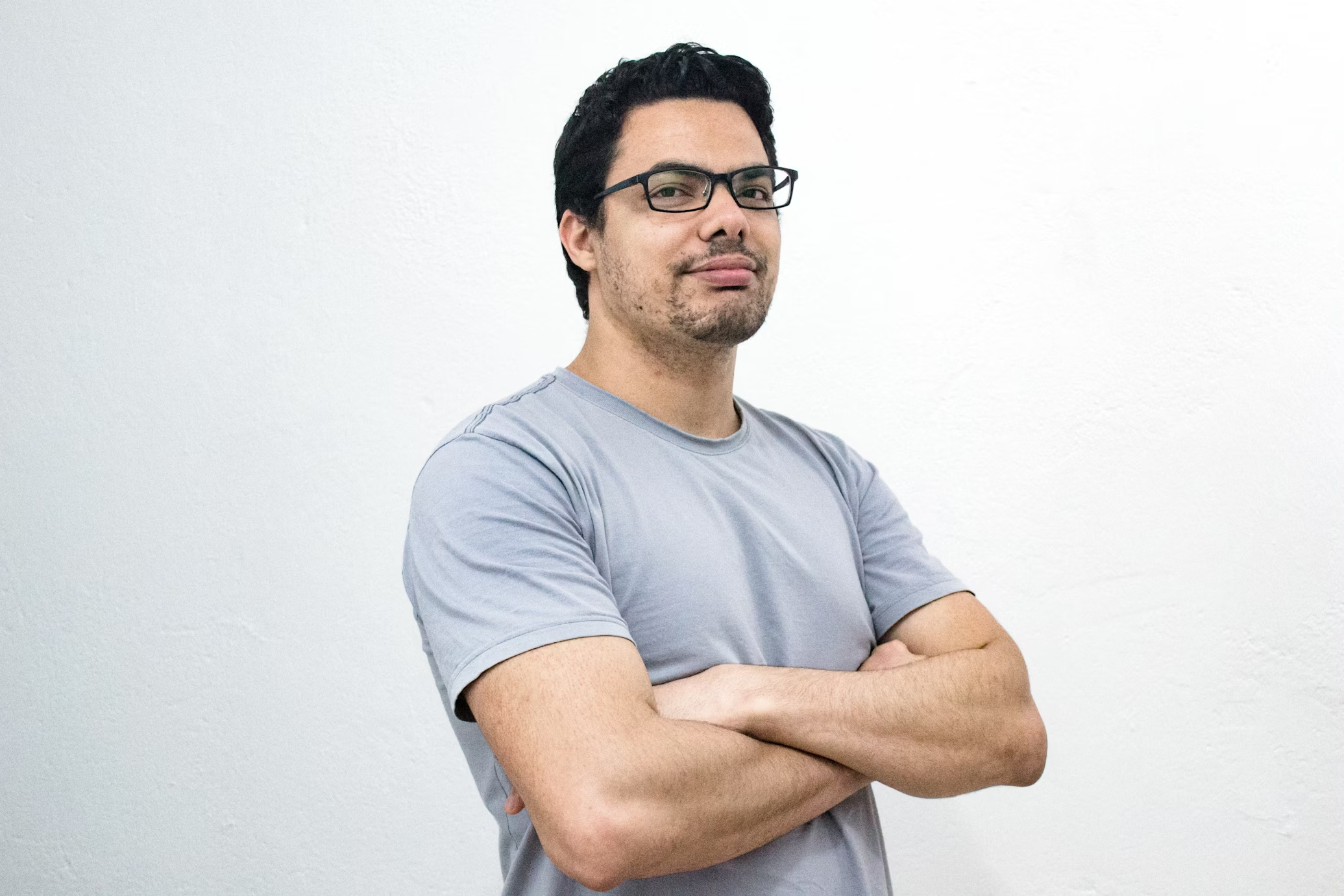
Hi, I’m Jo
I run Lemon Counselling, a small practice based in Christchurch. I hold a Bachelor’s degree in Psychology and Counselling and a Certificate in Online Counselling. I’m also a trauma-informed practitioner — which means your experiences are met with care, safety and respect, and we go at your pace.
I was born and raised in South Africa and have lived in New Zealand for nine years, so I know a fair bit about starting again somewhere new. I have a slight obsession with houseplants, and I’ll probably greet your dog before I greet you — no offence.
Through my own therapy journey I have been lost in the woods, and I’m intimately familiar with the shame, sadness, anxiety and confusion that jump out from behind the trees. Together, we can navigate your unique forest and find our way through it.
The practical bits
- $150 per 60-minute session.
- Online / In person (Christchurch)
- No referral needed. You don’t need a diagnosis or a doctor’s note. Just get in touch.
- English or Afrikaans — ons kan gerus die berading in Afrikaans doen.
- Take your time deciding. Try a few sessions and see whether we click. If I’m not the right fit, no offence taken at all.
- 24 hours’ notice is needed to cancel, as your session is reserved just for you.
The Counselling Online page covers everything you need for a session, and the FAQ answers the questions most people are too polite to ask.
Other things I work with
If things feel unsafe right now — if you’re thinking about ending your life, or you’re not sure you can keep yourself safe — please don’t wait for an appointment. You can call or text 1737 free, any time, to talk with a trained counsellor. In an emergency, call 111. There’s a fuller list on the Numbers and support page.
CONTACT
If you’ve read this far, something here probably landed. You’re welcome to email me at [email protected], or use the form below. You don’t need to explain everything — a sentence is plenty.